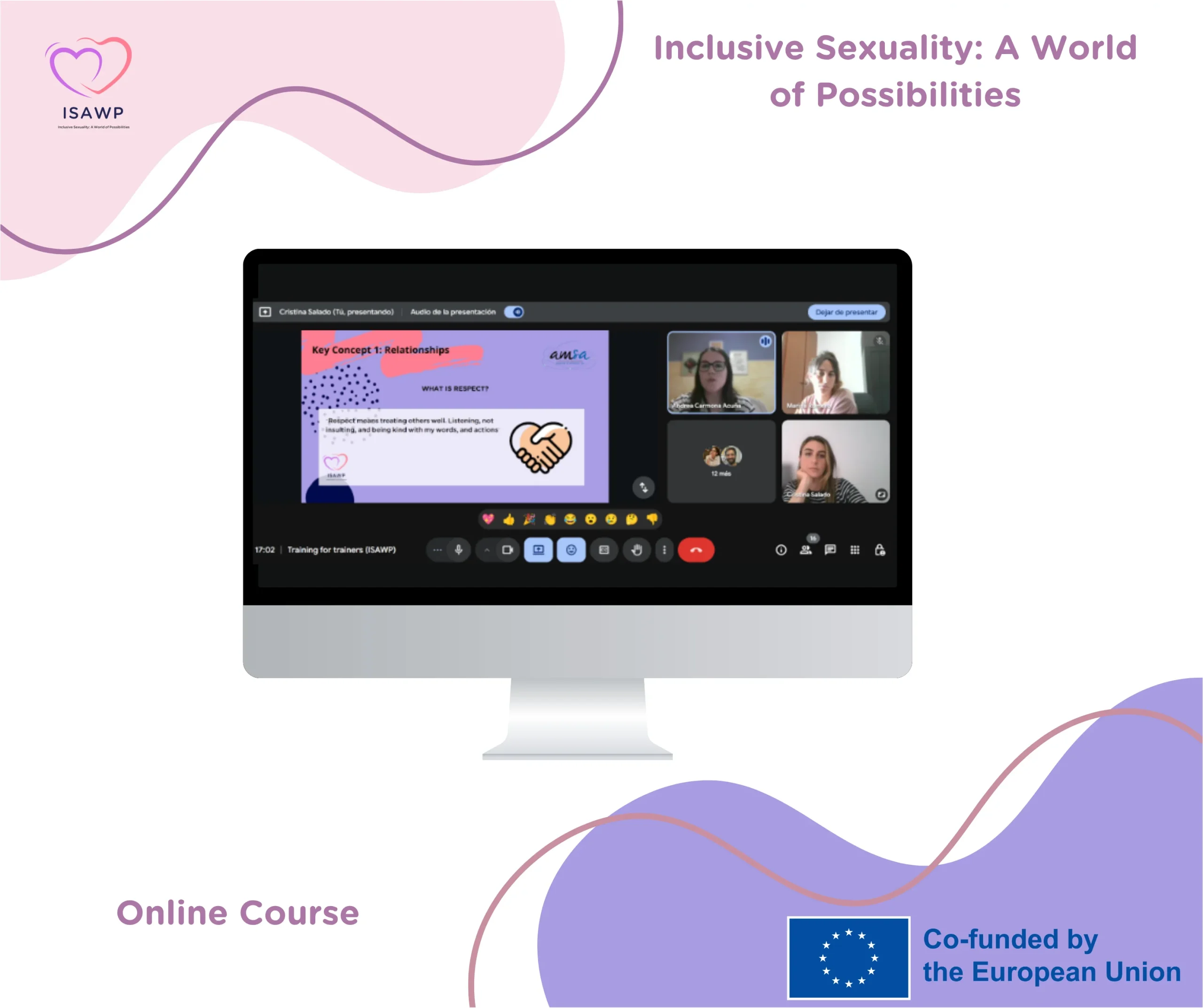
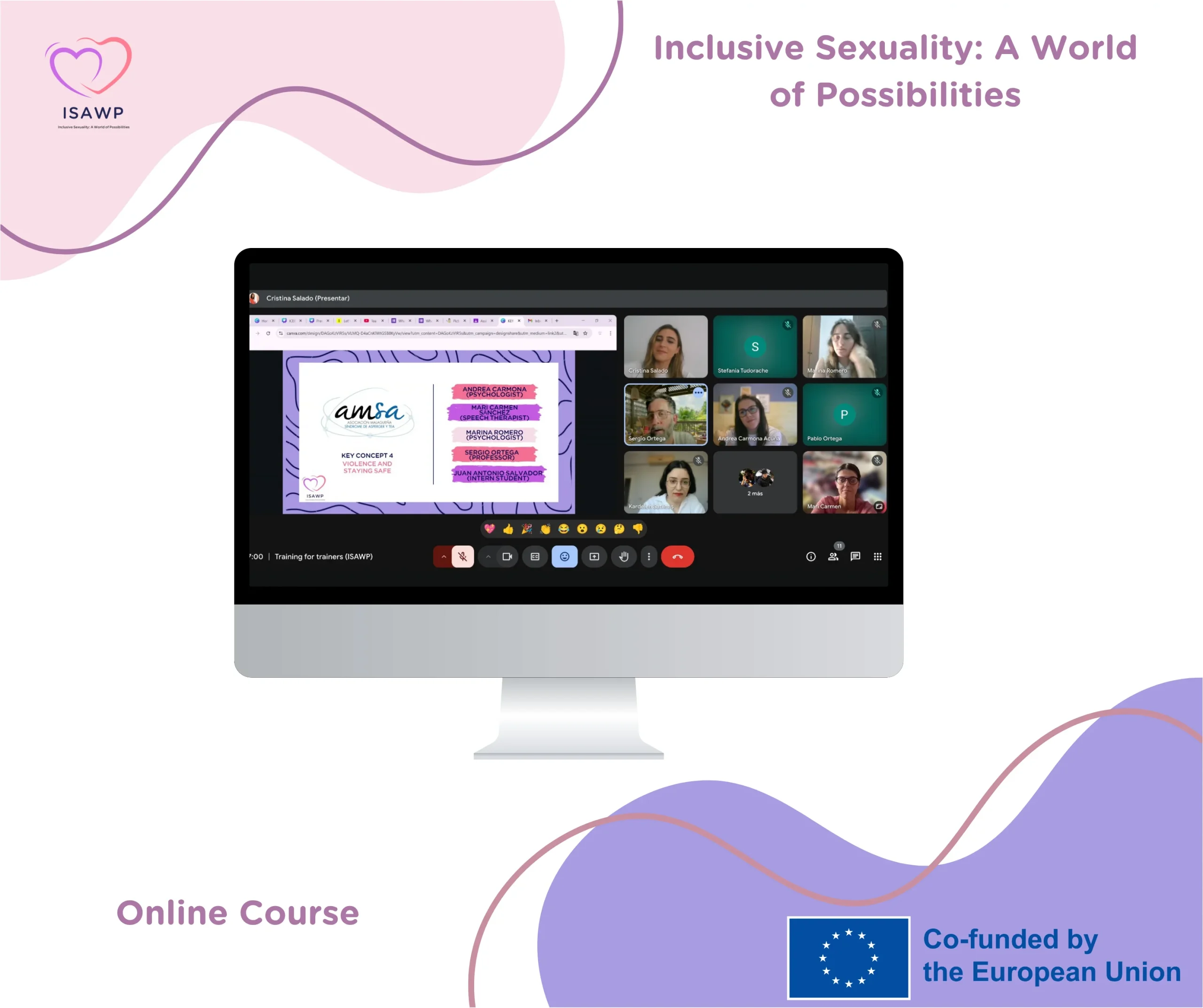
Between 12 May and 10 June 2025, the online course ISAWP: INCLUSIVE SEXUALITY: A WORLD OF POSSIBILITIES was successfully held, organised by partner associations AMSA (Spain), FAJUB (Portugal) and GFD (Turkey). Fifteen participants, five from each country, met weekly via Google Classroom for a total of 60 hours of training. Aimed at social educators, trainers and professionals working with young people, particularly those with functional and/or intellectual disabilities, the course sought to equip attendees with practical, innovative tools grounded in human rights and the key health and well‑being principles championed by international bodies such as UNESCO and the WHO, in order to address sexuality inclusively within this context.
On 13 May, we kicked off with units 1 and 2: “What Does Disability Mean?” and “Affective Sexual Education,” reflecting on the impact of disability on emotional and sexual life and laying the foundations for emotion‑focused, respectful sex education. In the second session on 20 May, covering units 3, 4 and 5, we delved into “Relationships,” “Values, Rights, Cultures & Sexuality” and “Understanding Gender,” exploring social bonds, sexual rights and gender constructs. On 27 May, Units 6, 7 and 8 addressed “Human Body Development,” “Violence & Staying Safe” and “Skills for Health & Well‑Being,” enabling us to identify bodily changes, prevent gender‑based violence and practise healthy habits. On 3 June, we tackled units 9, 10 and 11 about “Sexuality & Sexual Behaviour,” “Sexual & Reproductive Health” and “Intervention with Families” studying desire, pregnancy and STI prevention, and family support strategies. Finally, on 10 June, we concluded with Unit 12, “Intervention & Training with Professionals,” sharing techniques to empower educational teams in promoting truly accessible sexuality education.
Over these five weeks, participants developed tailored teaching materials such as pictograms, role‑plays and videos that proved invaluable for understanding and applying the concepts explored. In the final debrief, they reported feeling more confident explaining sexuality in simple terms, promoting consent and boundaries, teaching prevention methods, and supporting colleagues and families.